Monday, August 12, 2019

Green Sanctuary in the City

Image result for high park cherry blossoms

Cherry Blossoms in High Park, Toronto

Then the angel showed me the river of the water of life, 
bright as crystal, flowing from the throne of God and of the Lamb 
through the middle of the street of the city. 
On either side of the river is the tree of life* 
with its twelve kinds of fruit, producing its fruit each month; 
and the leaves of the tree are for the healing of the nations.

Revelation 22: 1-2

Our younger daughter, Emily, lives in Toronto, a concrete jungle in many respects. We are impressed, though, that she finds places of green sanctuary in different nooks and crannies of the city, around where she works right downtown, and in her neighbourhood a little to the west. Her apartment is actually not far from High Park, one of Toronto's gems, but she sends us photos from lunch breaks in small parks and gardens maintained by the city.
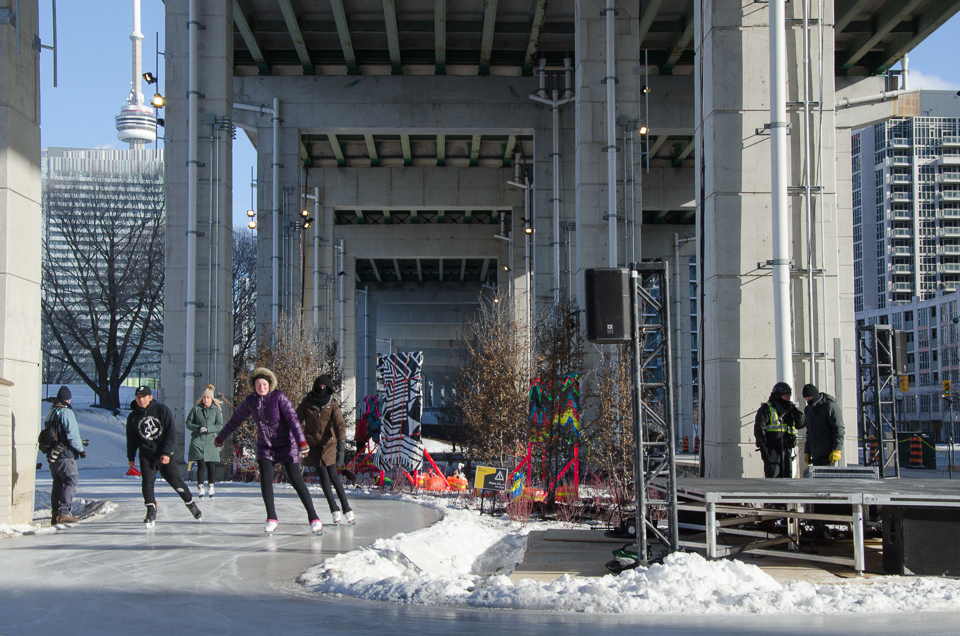
Image result for the bentway toronto

The Bentway, Toronto

As Toronto soars upward with condo buildings and other highrises there is a challenge to create sufficient green space to nourish the souls of residents. One of the newer parks is the Bentway which is underneath one of TO's busiest expressways and becomes an ice-skating oval in winter. 

Image result for elevated park toronto

There is a proposal for an elevated park, not unlike the High Line in New York City. It would be hugely expensive ($2 billion) to construct and the benefits difficult to measure when so much infrastructure work is necessary . Still, we are coming to realize that in a world that is becoming increasingly urbanized we don't function well without time amidst trees and flowers. 

I just found out that a Forest Bathing trail system is being developed in Markham where people can connect with nature in a contemplative way, on the model of the extensive parks in Japan which are actually part of the national health program. https://parkpeople.ca/2018/09/26/shinrin-yoku-markhams-new-forest-bathing-trail/

Pew Research just published a piece on urban parks which interviews several coordinators in major US cities. One of them Nette Compton, observes:

The role of the urban park continues to evolve, both in the performance of functional services, and our expectations for what purpose it can serve. As our nation and world become increasingly urban, we must rely more heavily on parks to provide us with many resources: open space and access to nature, recreation opportunities, environmental functions like storm water retention and cooling, beauty, and inspiration.

https://www.pewcenterarts.org/post/urban-parks-and-civic-life-insights-leaders-pa-horticultural-society-trust-public-land-high

Image result for point pleasant park halifax

Point Pleasant Park, Halifax

These parks are often oases from the din of cities as well, and establishing them as quiet places is becoming a priority as well. When we lived in the heart of Halifax we were blessed to live a short walk from Point Pleasant Park and went there often. 

I've noted before that the bible begins in a wilderness garden and end in an urban garden. Books generally begin with the best and end with the best, so those of us who are people of faith should pay attention, don't you think? 


Image result for the highline

The High Line, New York City

Saturday, August 10, 2019

Indigenous Peoples and Care for Creation

Image result for international day of the world's indigenous peoples 2019 canada

Yesterday was International Day of the World's Indigenous Peoples. According to the United Nations website:


There are an estimated 370 million indigenous people in the world, living across 90 countries. They make up less than 5 per cent of the world's population, but account for 15 per cent of the poorest. They speak an overwhelming majority of the world’s estimated 7,000 languages and represent 5,000 different cultures.
Indigenous peoples are inheritors and practitioners of unique cultures and ways of relating to people and the environment. They have retained social, cultural, economic and political characteristics that are distinct from those of the dominant societies in which they live. Despite their cultural differences, indigenous peoples from around the world share common problems related to the protection of their rights as distinct peoples.
It seems important to me that we are all aware of this, and I would add that we must become more aware of Indigenous spirituality, particularly those aspects which honour and steward the Earth. We are awakening to the grim truth that the Imperialist destruction of Indigenous cultures has not only deeply affected generations of those who lived on the land before Europeans arrived, our literal and figurative poisonous ways has meant the desecration of the environment which is necessary to sustain us. Often Indigenous practices were associated with paganism rather than received as wisdom which respected both Creator and Creation.

Image

Flag designed by Kwakwaka'wakw artist Curtis Wilson.
When Moderator Bob Smith apologized to Native Peoples on behalf of the United Church of Canada in 1986 he began by saying: 
Long before my people journeyed to this land your people were here, and you received from your Elders an understanding of creation and of the Mystery that surrounds us all that was deep, and rich, and to be treasured. We did not hear you when you shared your vision. 
In our zeal to tell you of the good news of Jesus Christ we were closed to the value of your spirituality. We confused Western ways and culture with the depth and breadth and length and height of the gospel of Christ. We imposed our civilization as a condition of accepting the gospel.
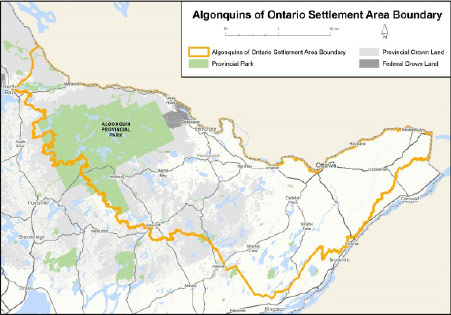
Here in Canada we should welcome land settlements which include co-management of unceded lands and encourage recruiting Indigenous people to work in patrolling and protecting the North. In Ontario there is an agreement in principle for that sort of co-management with the Algonquins which includes a huge area, including Algonquin Park. 
 As Christians we can accept that humility is a virtue and learn from those who have always understood the wealth of the planet as far more than what could be extracted for the benefit of a few. 

settlement-area-boundary


Friday, August 9, 2019

The Unrequited Love of Automobiles

Image result for spirit of the automobile coventry cathedral

Coventry Cathedral 1996 

From time to time I recall the report of a worship service in Coventry Cathedral which took place in 1996 to commemorate the 100th anniversary of the automobile. Officials from car manufacturers were in attendance but they must have felt uncomfortable because the provost of the cathedral offered up a confession asking God's forgiveness for the "environmental pollution from exhaust fumes, the relentless encroachment of new roads into our countryside and the appalling toll of death and injury" with the words 

The wheels had already begun to fly off at the start of the service when smoke from the 1897 Coventry Daimler driven down the aisle to launch proceedings all but choked the car worshippers.
Then the 1,000 attendees were then shocked by a naked woman protestor, a la the legendary Lady Godiva, who took to the pulpit to declare "In the spirit of Lady Godiva, I am here to mourn the death of my mother and the 17 million people killed directly by the motor car and to remember the mothers who have lost their children, the orphaned children, our brothers, sisters, fathers and friends. Mother Earth forgive us."
I thought of this fiasco and flirtation with idolatry when I saw Nathan Heller's New Yorker piece with the title Was the Automotive Era a Terrible Mistake? For a century, we’ve loved our cars. They haven’t loved us back.
Heller explores what he describes as the North American "fetishism" of cars, a post-war obsession with the automobile which seems to be running out of gas with Millennials. Getting a driver's license is no longer the the rite of passage for teens it once was. Still, Heller observes: 
It is odd, then, that we still look to the mid-century for evidence that cars proved their necessity and worth. Tell someone that you cannot drive, and they respond as if you had confessed an intimate eccentricity, like needing to be walked on with high heels before bed. “Re-e-eally! ” the reply goes. “How do you . . . ?” The answer is planes, trains, buses, ferries, cabs, bikes, feet, and the occasional shared ride: almost anywhere in the world can be reached this way for less than the amortized cost of a car and its expenses.
We were just forced into purchasing a new vehicle after our tried-and-true Santa Fe was written-off in an accident. We had hoped to wait a few more years to buy one of the emerging hybrid or electric vehicles. I figure that we should look on any internal combustion engine vehicle as a gas-guzzler, but the choices for alternatives are still limited. Meanwhile we'll also cycle as much as possible, and use "shank's mare."
What do you think. Are automobiles a blessing from God or a necessary evil? Has our automobile idolatry kept us from developing alternative forms of transportation? And What Would Jesus Drive? 
Image result for what would jesus drive campaign


Thursday, August 8, 2019

Thunder Season

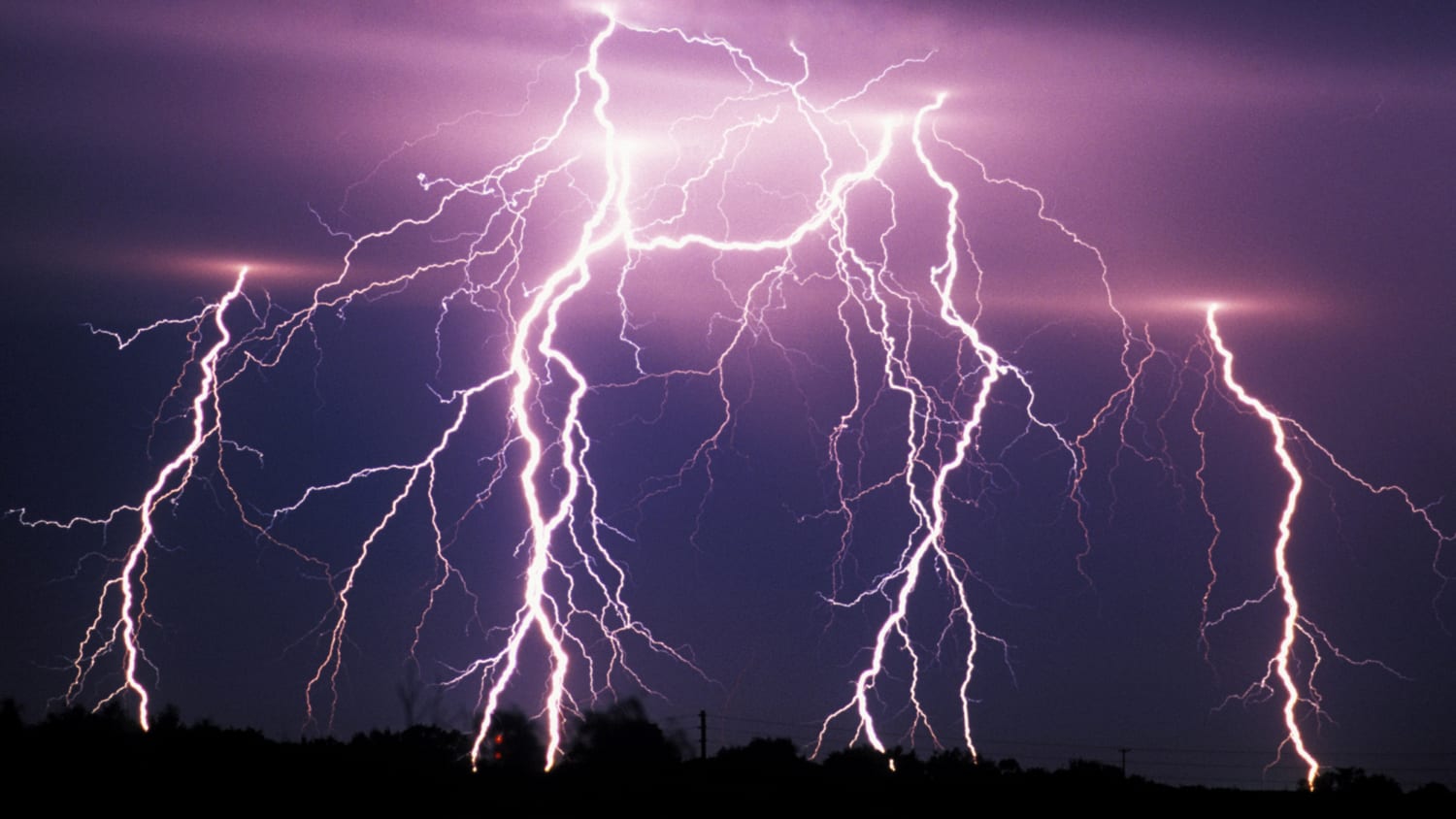
Image result for lightning distance it can travel

“At this also my heart trembles,
    and leaps out of its place.
Listen, listen to the thunder of his voice
    and the rumbling that comes from his mouth.
Under the whole heaven he lets it loose,
    and his lightning to the corners of the earth.
After it his voice roars;
    he thunders with his majestic voice
    and he does not restrain the lightnings[a] when his voice is heard.
God thunders wondrously with his voice;
    he does great things that we cannot comprehend.


Job 3:1-5(NRSV)

It seems as though each year I feel compelled to write a thunderstorm blog, so here is the 2019 version. A couple of weeks ago I began barbecuing, or grilling as we now describe it, when the rain moved in quickly. Dedicated as I am I continued my culinary task when a loud and immediate clap of thunder got me airborne. I literally jumped several centimetres, a feat which grows less likely with each passing day. This is the weird part -- I loved it. 

I have been terrified by thunderstorms which put the fear of God in me, and exulted in them, at times simultaneously. We have been trapped in vulnerable situations while canoe tripping through the years as thunderstorms raged around us, and it wasn't pleasant. Yet later we told the stories of our adventures with gusto. Why is that? 


In chapters 36-38 of Job, one of my favourite books of the bible, there is a lot a thunder and lightning. Not only is God the source of thunderstorms, there is a sense that the Creator is a sort of Thunder God. Move over Thor!


Well, don't go under that tree on the golf course this afternoon (severe thunderstorm watch)   and "if thunder roars, head indoors" because lightning can strike 8 to 16 kilometres from the storm. 


Oh yes -- enjoy!


Wednesday, August 7, 2019

Resilient Tree of Life

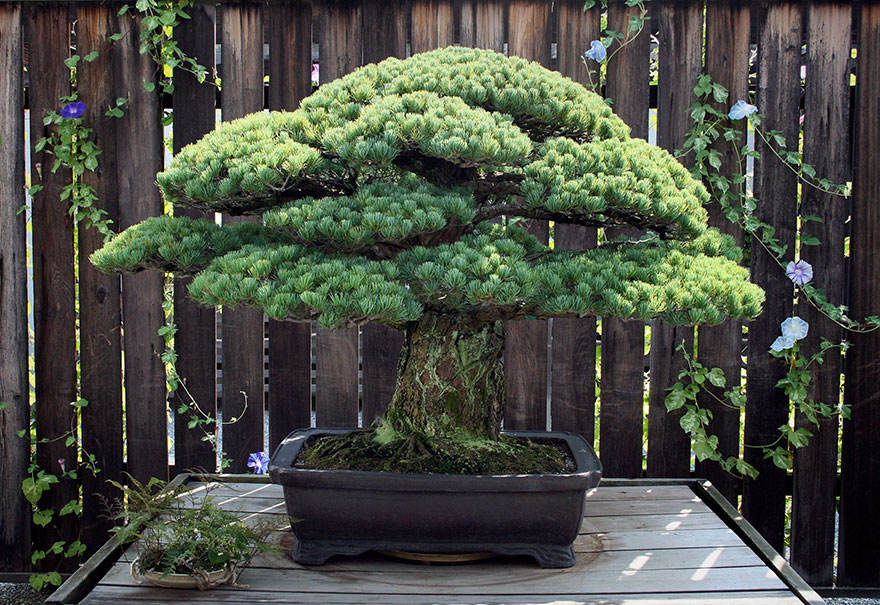
hiroshima-bonsai-tree-2

Last week we were in Algonquin Park where I provided worship leadership in the Cathedral of the Trees summer ministry. The United Church trailer for participating clergy is situated beneath towering white pines in the Lake of Two Rivers campground.

Yesterday, on Hiroshima Memorial Day, I learned of another white pine, this one a small Japanese bonsai with an extraordinary history. Read this by James Gould-Bourn:  

I can barely keep my basil plant alive, but this remarkable bonsai tree has been around for nearly 400 years. Planted in 1625, the tree is currently 394-years-old, and if that isn’t impressive enough already, it also survived the atomic bomb attack on Hiroshima. The tree belonged to the Yamaki family, who in 1945 lived just two miles away from the spot on which American forces dropped the bomb that killed an estimated 140,000 people. Somewhat amazingly, the tree and the Yamaki family survived the blast relatively unharmed.

It’s currently housed in the U.S. National Arboretum in Washington, D.C. It was given as a gift to the United States by bonsai master Masaru Yamaki in 1976. Staff at the arboretum were unaware of the white pine’s connection to Hiroshima until 2001, when Yamaki’s grandsons explained its extraordinary history while visiting the collection.

How fitting that this pine withstood the worst that humanity could inflict upon it and now resides in the country considered the greatest enemy of the Japanese during WW2. Truly a tree of life. 

Image result for tom thomson pine cleft rock

Pine Cleft Rock -- Tom Tomson

Tuesday, August 6, 2019

Good News for Arctic Conservation


I have been fairly cranky about what I've described as the "suck and blow" environmental policies of the Federal Liberals in Canada. I feel that Canadians have been betrayed by promises broken in order to placate voters who will never be satisfied with putting the well-being of the planet ahead of short-term financial gain. When the feds bought an aging pipeline and approved another I decided that in good Christian conscience I couldn't vote for the current government in this Fall's election.

That said, many Canadians may have missed an important announcement over the holiday weekend. Prime Minister Justin Trudeau was in Iqaluit on Thursday to announce the creation of one of the world’s largest conservation areas and Canada's largest marine protected area: the Tuvaijuittuq Marine Protected Area and the Tallurutiup Imanga National Marine Conservation Area, both in the northeastern region of Nunavut.


Tuvaijuittuq means "the place where the ice that never melts," a shrinking reality in the North. To protect this area Trudeau, along with Nunavut Premier Joe Savikataaq and P.J. Akeeagok, the president of the Qikiqtani Inuit Association, unveiled historic plans to create a 427,000-square-kilometre conservation area off northern Ellesmere Island at Nunavut Arctic College. Fisheries Minister Jonathan Wilkinson and Environment Minister Catherine McKenna were also in attendance.
The allocated area is larger than Newfoundland and Labrador, according to a statement from the Prime Minister's Office, or almost the size of Germany.

This is very positive news and I'm grateful to the federal government for this initiative. It doesn't change my mind about the election, but I don't de-crank readily!

Friday, August 2, 2019

Planting Hope


Algonquin Park Pine -- photo Ruth Mundy

We are just back from a week in Algonquin Park and the Cathedral of the Trees worship ministry there. We paddled, hiked, and swam, often, so we're home to rest up from our vacation. On several of the trails we saw the magnificent reminders of an other era in terms of the trees of the forest. One pine tree had an explanatory sign saying that it was approximately 225 years old and likely germinated at the result of a fire in 1790. It was a reminder that trees are the oldest creatures on the planet, and some, such as redwoods and sequoias, are the largest. We also came upon hemlocks, some of which are 400 years old in the park and in Algonquin  alone there are more than 20,000 hectares of hemlock dominated forest aged over 180 years old. We also enjoyed the variety of the forest from our canoe, an entirely different and often more distinct perspective. 


Algonquin Forest Ramble -- photo Ruth Mundy

During my Sunday morning reflection I encouraged participants to plant trees, either themselves or through organizations such as Forest Ontario. Surely it is a powerful act of faith to plant trees which we may never see come to maturity. That said, our next door neighbour remembers when the locust which now towers over our house in the front yard was planted,and she's younger than we are. Recently a one-day planting initiative in Ethiopia resulted in 350 million trees going into the ground. Now,there is a concerted, communal act of faith and promise for the future!

I like the poster for Forests Ontario which portrays a tree as the lungs of the Earth. I imagine that God would agree. Here is a link if you're inclined to contribute:

https://www.forestsontario.ca/community/get-involved/donate/