Saturday, September 2, 2017

The Cry of the Earth

Pope Francis and Ecumenical Patriarch Bartholomew
We now into the season of the Church Year known as Creation Time, an observance  of the past fifteen years or so in the United Church of Canada. It is truly ecumenical and global though, and on September 1st Pope Francis of the Roman Catholic church and Orthodox Patriarch Bartholomew issued a joint statement to mark the World Day of Prayer for the Care of Creation.

The two said that what’s happening in the world today reveals a “morally decaying scenario, where our attitude and behaviour towards creation obscures our calling as God’s co-operators.” They call on those “in positions of social and economic, as well as political and cultural, responsibility to hear the cry of the earth, and to attend to the needs of the marginalized.” Those leaders, Francis and Bartholomew write, are called to “respond to the plea” of millions, and support “the consensus of the world for the healing of our wounded creation.”

One point stressed by Francis and Bartholomew is that care for the environment, and care for the poor, are inextricably linked.“We are convinced,” they say, “that there can be no sincere and enduring resolution to the challenge of the ecological crisis and climate change unless the response is concerted and collective, unless the responsibility is shared and accountable, unless we give priority to solidarity and service.”

These thoughts are contained in Pope Francis' encyclical from a couple of years ago, Laudato Si, and they are wise and address the broader issues of the planet. I appreciate that these leaders of the majority of Christians on the planet are so forthright, and that they are offering an alternative to the pathetic denial of fundamentalist climate change deniers. The pontiff and patriarch didn't look ready for a hike in the woods as they signed the statement, but you can't have everything.

Here's hoping that someone is listening to what Francis and Bartholomew are saying.

Pope and Patriarch: A common declaration for a shared world

Wednesday, August 30, 2017

Reverence: The Monarch Project

Image result for reverence the monarch project


Sometimes it doesn't take much to make me happy, and often it is the seemingly small observances of the natural world which lifts my spirits.

Since our return to Ontario we have noticed more Monarch butterflies than we have seen in years. We've heard a lot about the catastrophic decline in Monarch numbers and the causes are many. Habitat loss in their wintering grounds in Mexico, efforts to eliminate milkweed which is an essential source of sustenance, and urbanization of breeding areas are all factors. Apparently the cooler weather of early summer this year was beneficial. There are also greater efforts as well to protect the forests in Mexico where the Monarchs congregate, along with the encouragement to plant milkweed. All these may all be factors in recovery, although this is just one year.

Image result for monarchs in mexico 2015

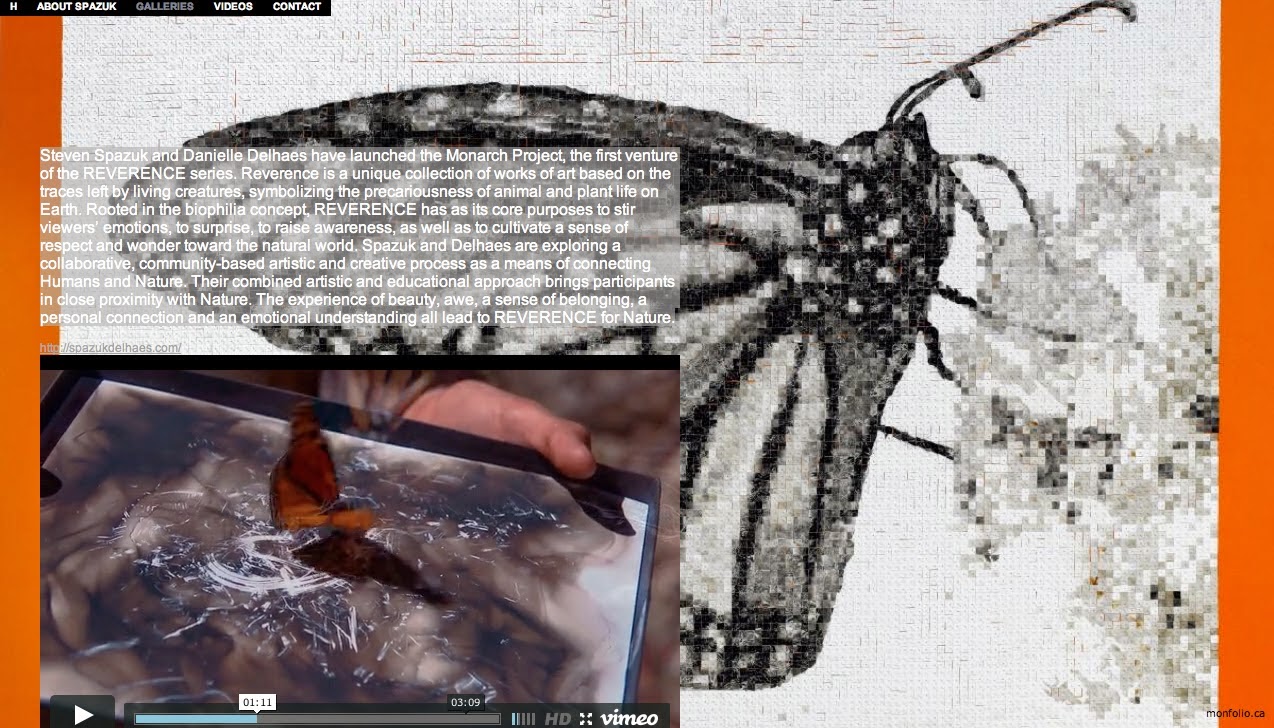
There is a film which I would like to see called Reverence: The Monarch Project. It's only 13 minutes long but the trailer is fascinating. Here is the description of the story line:

Reverence: The Monarch Project presents the synergy between art and science. The duet Spazuk-Delhaes collected, in their natural environment, thousands of traces of monarch butterflies on some carbon black to assemble then and create a self-portrait of it majestic lepidopterous. From Mexico to Quebec, the film depicts the journey of these insects who's survival is threatened. Thanks to a meticulous work involving hundreds of volunteers who cut and and assemble pixels to form a unique image. The artistic creation's purpose is to raise awareness about precariousness of the animal and vegetable life.

I like this notion of reverence. When we sense the holy in Creation, when we return to wonder for the the creatures we may have once taken for granted, such as butterflies, we may be motivated to honour and protect. The reverence we experience in places of worship such as churches must be extended to the forests and meadows and waterways.

Have you seen more Monarchs this year? Does the Reverence film intrigue you? Do you experience the holy in the natural world? I think I'll dig out my copy of Barbara Kingsolver's Flight Behavior,  which is also about Monarch butterflies and reverence.

Image result for barbara kingsolver monarch butterfly

Monday, August 28, 2017

Water Week & Living Water

sewage treatment plant with sunrise

Sometimes it's a challenge to figure out the international and national events such as special days and weeks. World Water Day was back in March and World Oceans Day was in June. But this is World Water Week -- are you keeping up here? There is a conference in Stockholm with representatives from 130 countries, so it's a global gathering. They will look at issues of improving water quality and reducing waste.

This morning we cycled along the Belleville waterfront, which is on the Bay of Quinte. The lovely trail goes past the sewage treatment plant which was a bit "whiffy" today. After Ruth turned to go to work I carried on past the water treatment plant. I wonder how many people in the city could identify where each of these essential processing facilities are.

We are blessed with a lengthy trail, but there is not a public swim beach in Belleville, which is a shame. Is it because of concerns over water quality.  I see that some Dalhousie students are lobbying for a swimming access spot on the Halifax waterfront, something which would have been unthinkable a few years ago when sewage poured directly into the harbour.

As we watch Texas turn into a watery nightmare because of Hurricane Harvey we know that there will be issues with water quality for millions of people even though days ago they would have taken this for granted.

Water is a recurring theme in scripture and Jesus is Living Water, because it is the source of life and precious. On a planet of nearly seven billion humans it's important that we make the connection between the spiritual metaphors for water and the practicalities of wise water use for all creatures, great and small.

Strategy 2016 - WWW Theme Sustainable Growth

Wednesday, August 23, 2017

Even the Fish of the Sea are Perishing

Image result for master mariner david blackwood

Fish, fish, and more fish -- or less fish. The discussions about the presence of fish and the absence of fish were constant during our stay in Newfoundland during the month of July. If we had been moving around or only in the province for a week or two we might not have been as aware. A month makes a difference and we were settled for four weeks on Change Islands, a community with a fish plant.

Fish have become scarce in this province which a destination for European fishers of many nationalities before becoming a British colony. Change Islands was a summer fishing destination for Paleo-Esquimault people, then Beothuk Indians long before the Europeans arrived. At one time the population of Change Islands was as many as 1200 year-round residents but has dwindled to 200, in no small part because of the disappearance of fish. 

Image result for newfoundland stamp cod fish

While we there the province acknowledged a dubious anniversary, the 25th since the declaration of a moratorium on fishing cod, once so abundant it was assumed that it was impossible to overfish the stocks. That was catastrophically wrong and so a "two-year" moratorium was imposed which has stretched on for a quarter century. For a week following the actual date CBC Radio in Newfoundland ran a series on what happened then and the gradual recovery of cod stocks. There is pressure to expand the small commercial fishery but scientists insist this would be a disaster. While we were there the recreational fishery allowing individuals to catch up to five fish a day was opened, but there wasn't much out there worth keeping.

Other species have sustained a smaller group of fishers, including crab and shrimp, although shrimp have now been over-fished as well. There were a fair number of lobsters "on the go" as folk there say, but in one of the communities I served as a minister four decades ago there are only three lobster fishermen today compared to the thirty back then. The Change Islands fish plant is empty a good part of the year because there just aren't species to process.

This is an ecological tragedy and a human crisis as well. The Change Islands school is almost without students now, and we chatted with the one student who will enter Grade 12 this Fall. All her courses this year will be online -- except gym! It is possible that within a decade or two the government will decide to end costly services to the aging, shrinking populations of many communities such as Change Islands. Resettlement is a real possibility.

Part of the public conversation while we were there was about a different outlook on fishing that moves from methods which are destructive to sustainable practices. The example of Iceland is cited, a nation which reinvented its failing fishery so that it is now a viable aspect of the economy. Interestingly, I spoke with an Icelander during our vacation there last September. He was proud of the change of direction for the fishery and mentioned Canada as a cautionary tale of how not to steward the resources of the sea.

At the top of this blog is an image by David Blackwood, a Newfoundland artist now living in Port Hope, Ontario. I've used this before in a blog. We had the honour of a meal with David and his wife several years ago and I asked him about the subject. This was his uncle, the Master Mariner of the title for the work. It is a lament though, for a lost way of life, one we can hope will be restored, even if partially. There is a biblical reference from the book of Hosea tucked along the bottom:

Therefore the land mourns,
   and all who live in it languish;
together with the wild animals
   and the birds of the air,
   even the fish of the sea are perishing.

Hosea 4:3
 
In Hosea there is also the promise of restoration. We'll  continue to pray for this in the province we have grown to love through the years.  
 
Image result for cod book
 

Monday, August 14, 2017

Devilishly Hot

Image result for lucifer heat wave

There are a number of Biblical names for the presence of evil in the world. The devil is one, Satan another, Beelzebub, Father of Lies, and Lucifer. Lucifer is the label given to the latest killer heat wave affecting Europe. Temperatures soared about 40C in places, causing distress to millions. Crops have withered, water supplies have been depleted, roads have sagged and train tracks buckled. In the mountains of Slovenia the first ever overnight temperature of 20C was recorded. Earlier this summer hot, dry temperatures turned Portugal into a tinderbox and a number of people were killed by wildfires which swept across highways.

Rain has brought relief to some countries but we can pray that governments do not ignore what is happening, or consider it an aberration. What some are calling "global weirding" has produced both unprecedented droughts and floods in locations across the planet. A wildfire in Greenland and this year's stunning number of icebergs point to climate change at one of the poles.

What scares me if that this isn't Lucifer at work, it is the result of human activity and indifference to a global crisis. We can't claim that "the devil made me do it" either. We must pay attention and develop strategies for change.

Thoughts?

Wednesday, June 8, 2016

Lament & Celebration on World Oceans Day


I haven't created a Groundling blog entry in a long time, but World Oceans Day demanded my attention. I have enjoyed the ocean, wherever I have encountered it. I have walked beaches on both sides of the Atlantic, the Pacific coast of Canada and Costa Rica, the Mediterranean and the Caribbean. We have "swum with the fishes" in reefs in Cuba and Costa Rica. We've kayaked off Grand Manan Island, the Magdalen Islands, the Bay of Fundy, Chesapeake Bay, and the Saguenay Fiord. We love the rawness of  the waters of Northeast Newfoundland, where we once lived and later this year we will experience the Icelandic North Atlantic.

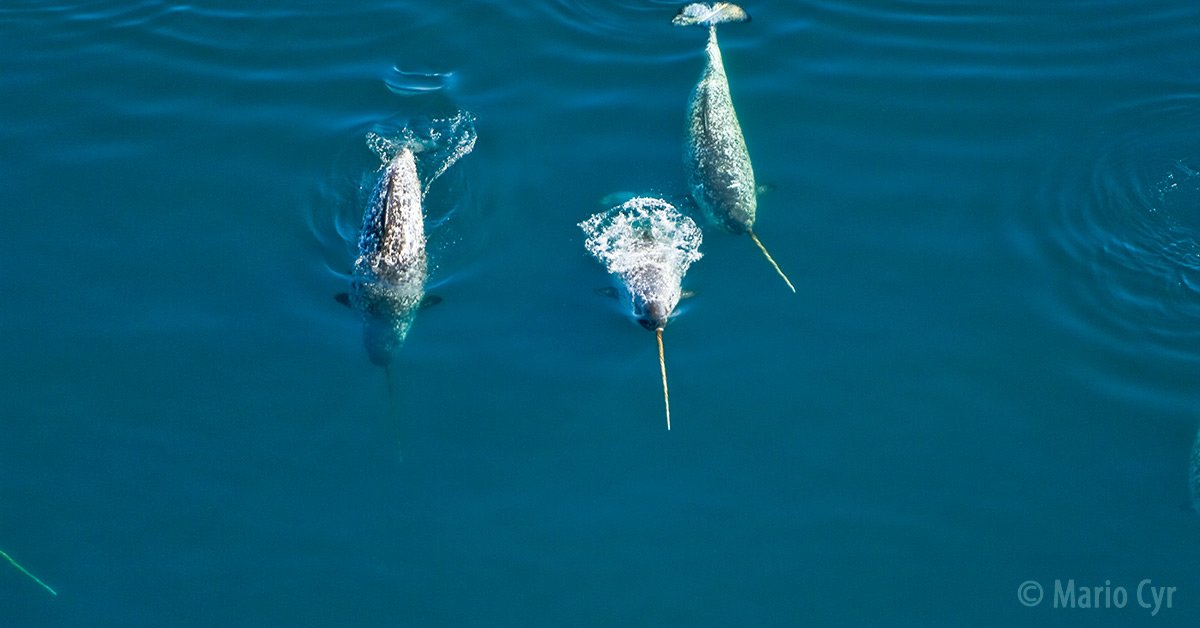
When I look at what I've written I'm amazed at a lifetime of experience around and on and in oceans and seas and I'm deeply grateful for these opportunities. We've seen a variety of whale species on many occasions (never narwhals), often close at hand, as well as a great variety of marine life, all of which was cause for delight.

When I read that by 2050 there will be more plastic in the world's oceans than fish, by weight, I am appalled. When I hear that the Great Barrier Reef, one of the natural wonders of the world, is dead in large portions I want to weep. When we're informed that human-made sound is probably driving sea creatures, including cetaceans, mad, I am ashamed.

Where is our respect for Creation? How can we be so callous and destructive? Despite my disappointment and discouragement, I will not despair. Somehow we must become part of the solution. I now ask myself whether I must take the steps to simplify my consuming Western lifestyle to the degree that I no longer visit the oceans and seas I love. It's not enough to lament. We also need to act, and Jesus did call us to simplicity.

What are your thoughts about this on World Oceans Day?


Saturday, January 16, 2016

Finding a Pulse on the Colorado

eloise kendy 640x400

The wilderness and the dry land shall be glad,
   the desert shall rejoice and blossom;
like the crocus it shall blossom abundantly,
   and rejoice with joy and singing.


Isaiah 35:1-2a

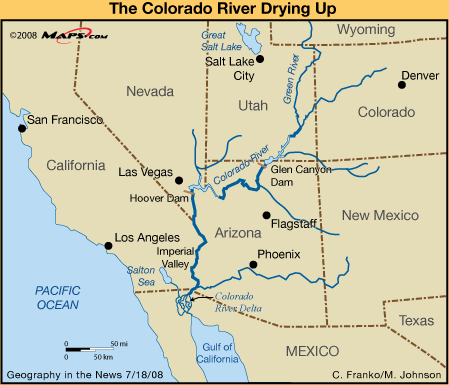
I like good news stories and there is one out of the States which is worth our attention. The once mighty Colorado River has been so degraded and diverted that it no longer flows to the sea. The delta which was once a rich and diverse ecosystem has dried up. The Nature Conservancy reports on what has occurred in the past few years:

Three years ago, an innovative agreement between the United States and Mexico ushered in a new era in international water management. Called Minute 319, the agreement authorized a broad array of actions in both the United States and Mexico. Among them was the recognition of the value of nature and the restoration of the parched Colorado River Delta through timed releases of water (called pulse and base flows) from upstream dams.Once an ecological treasure, the Delta is now a a dry, desolate river channel flanked by weed-choked floodplains and irrigated farmland. Fifteen years ago, conservation visionaries resolved to restore the channel and its floodplains to the critical wildlife migration corridor that it once was. Minute 319 initiated a full-scale feasibility test of that vision. By all accounts, Minute 319’s environmental provisions have been a success. In 2014, a pulse of water surged into the Colorado River Delta, rewetting the river corridor all the way to the Gulf of California for the first time in decades.

The result has been the return of wildlife, including bird species which disappeared years ago. Cottonwood and willow trees have suddenly appeared and some are already two metres tall.

Claiming that this is a resurrection might be premature, and a little too theological. But those responsible have certainly found a pulse, or at least created one. This is good news in the bigger scheme of God's Good News.

Thoughts?