Saturday, April 21, 2018

Blessing on the Woods

 
Lord bless the woods for perfect loveliness
For balm that heals the soul in care and stress!
 
When we lived in Halifax years ago I got to know a remarkable old man who despite approaching his 100th birthday was still mentally and physically vital. His name was Wilf Creighton and he became the Provincial Forester in Nova Scotia after spending time in Germany in the 1930's studying forestry. While he was there he learned fluent German and went to hear Hitler speak on a couple of occasions as he rose to power. Wilf also played hockey on a travelling Canadian team and had great photos of games on open-air rinks in the mountains. He also survived the Halifax Explosion as a boy and could spellbind an audience as he told the story of that fateful day.
 
One day Wilf drove us to his maple sugar bush operation north of Halifax and we roamed the woods (remember, almost 100!) He only fell once, and hopped back up again without a pause. Then we had a chin-wag in his cabin where I noticed the poster in the photo above on the wall. It is a prayer/poem by an American writer named Arthur Guiterman who was better known for his droll poetry.
 
The illustrations around the border are of many Nova Scotia creatures including moose and osprey and otters and a pileated woodpecker. The artist was William E. DeGarthe, a well-known painter in Nova Scotia in that day. He lived in Peggy's Cove and his studio is now a memorial gallery of his work.
 
Wilf told me that this poster was commissioned by the Department of Lands and Forests and was distributed to every school child in Nova Scotia, probably 75 years ago or more.  I thought it was lovely that this prayer giving thanks for the gifts of the woods was a gift to children of the province. He kindly took his tired old original and had copies made for me and his adult children. I cherish it.
 
Wilf died in 2008 at the age of 104.
 
We have all but expunged God from the education system and this poem is sentimental, but how can we go wrong with a blessing on the woods?


Thursday, April 19, 2018

The Last (Plastic) Straw


Commonwealth Youth Forum

During Lent this year I followed the encouragement of the Church of England to give up plastic, as I was able, a less traditional but worthwhile choice during Christian season of reflection. Well, I discovered that abstaining from plastic, even partially, is nigh on impossible. Just raising my awareness of the omnipresence of plastics in my daily life was eye-opening and -honestly - discouraging. My Saturday Globe and Mail used to arrive secured with an elastic band, except when there was precipitation. Now it's always in a plastic bag bound so tightly I have to rip it open. We try to buy day-old fruits and veggies to reduce food waste, but they are often entombed in plastic. As grandparents plastic has become the uneasy reality of virtually every toy purchase and I feel as though we should go to confession when we treat them to a take-out meal.

Why have we allowed this to become so pervasive? I get positively ill when I drive past a marina where huge pleasure craft are shrink-wrapped in plastic. as are bales of hay in the fields. A CBC reporter undertook giving up plastic for a few weeks and realized that toilet paper rolls are wrapped in the sh... -stuff- and tin cans are lined with it. It's EVERYWHERE!

US Consumption Stats

It's interesting that at the Commonwealth Conference, currently underway in London, there is an initiative to get the 53 participating countries to ban plastic straws. Billions of them are used every day around the world and they make their way into ditches, waterways and oceans. We largely stopped using plastic straws last year, carefully cleaning larger, sturdy straws for the grandlads. We get confused and even incredulous looks when we ask wait staff not to bring us straws when we're out for a meal.

I hope that Canada and other Commonwealth nations follow Britain's lead and ban straws. These countries represent more a billion people around the world, so it would make a significant difference. I look forward to returning to those soggy paper straws which always collapsed while drinking a milkshake (no, I don't!) 

What are your thoughts on the last straw?

Image result for commonwealth summit 2018 queen elizabeth

Monday, November 6, 2017

Charter for Trees


Charter of the Forest, signed Nov 6, 1217

Were you aware that when the British Magna Carta was signed 800 years ago it took place beneath some towering trees, a thousand years old or more at the time, one of which was still standing in 2015 at the anniversary? If "yew" didn't (my apologies), join the club. And did you know that two years later another charter was established two years later as a companion to the Magna Carta called the Carta de Foresta, or Charter of the Forest? Nah, I didn't know that either! In 1215 the British monarch had a monopoly on as much as a third of the extensive forests of the land, including Sherwood Forest. This monopoly was lucrative for the king but oppressive for the common schmo.

The reforms of the Magna Carta led to a new model for managing forest resources. The charter stated: “Every free man may henceforth without being prosecuted make in his wood or in land he has in his forest, a mill, a preserve, a pond, a marl-pit or a ditch, or arable outside the covert in arable land, on condition that it does not harm any neighbour.”

With this clause, responsibility for the stewardship of common resources on forest land shifted from the monarch to the community. The last clause of the charter asserted: “These liberties concerning the forests we have granted to everybody.”

This is the 800th anniversary of that historic charter, which set precedent for many other land use agreements around the world, including here in Canada.

It makes sense then that  today marks the launch of an ambitious project called The Charter for Trees, Woods, and People, which has incorporated the participation of thousands of Britons. https://treecharter.uk/ Citizens are invited to sign the Charter as a sign of support for the principles.


Image result for charter for trees, woods and people

We have a lot of trees in Canada, with a massive boreal forest. Just the same, we have taken our trees, woods and First Peoples for granted in ways that border on abuse.

I would hope that Christians whose story begins and ends with trees of life, and whose Saviour died on the "tree" would appreciate the practical importance of sustainable woods and forests.

Any tree-huggers out there (I are one!)?  Would it make a difference for Canadians to have a similar Charter? I don't think we'd be required to build a castle for the launch.  
 Image result for charter for trees, woods and people lincoln castle

Tuesday, September 26, 2017

Colonialism & Climate Change

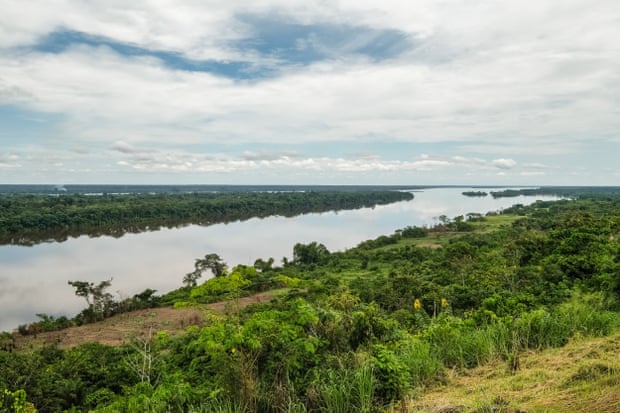
The Congo river from Yangambi, DRC.

                                                                   The Congo River

In one of the congregations I served as a minister there was an elderly woman who had served as a nurse in the Congo through the United Church of Canada. I had known her for years because she is a dear friend of my mother but I didn't know her story well until I was her pastor. She ended up marrying a Congolese man and had two children who grew up in Canada. Before she left she endured abuse from her husband, who had mental health issues. He also took a second wife, as was the custom in his region, but definitely not the practice of small town Ontario, where she grew up.

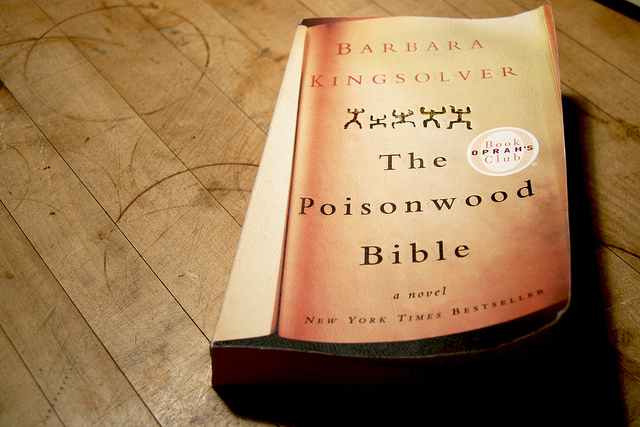
She loved the novel The Poisonwood Bible, by Barbara Kingsolver and led a discussion group about it at the church. It tells the story of a missionary family from the US who go to the Belgian Congo in the 1960's to spread the gospel. It gives insights into the perils and pitfalls of colonialism, both political and religious.

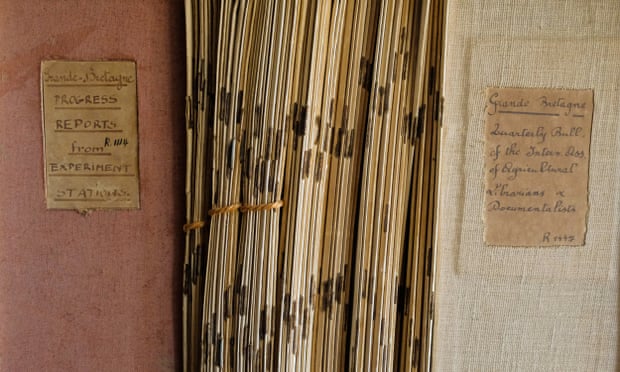
I thought of our family friend and the novel when I read about a trove of decaying notebooks discovered at a derelict research station found in the jungle of what had been the Belgian Congo. Yangambi Biological Station was once Africa’s leading forest and agriculture research institution and in the 1930's careful records were kept about tree growth.

The library of notebooks at Inera’s headquarters in Yangambi, DRC.

We now know that jungles such as the Congo forest play a critical part in controlling the rate of global warming; vegetation sucks up about 25% of the carbon dioxide we spew out of our tailpipes and smokestacks. But research shows the tropical carbon sink is no longer as effective as it once was. Using sophisticated technology it will be possible to establish a comparison between the research of eighty years ago and the information gathered today. Colonialism was destructive in so many ways, including the exploitation of resources but this may give some clues to help address climate change.

Read the article and read The Poisonwood Bible, which I really should do again. Go to just about any church book sale and you'll find a copy!
 
https://amp.theguardian.com/environment/2017/sep/22/long-lost-congo-notebooks-shed-light-how-trees-react-to-climate-change

Image result for the poisonwood bible

Wednesday, September 13, 2017

Memories of Solitude on Quiet Day


My wonderful wife, Ruth,  reminded me that a year ago we were exploring Iceland, a life-long dream for her. I was her willing partner in this adventure, although she did the "heavy-lifting" of establishing our route and booking the guest houses.

Iceland is a place of such extraordinary and other-worldly beauty that it is has become the backdrop for series such as Game of Thrones and a number of movies.

Image result for game of thrones iceland

Game of Thrones filming sites

Unfortunately the whole world wants to get in the on the beauty and this year 2.2 million visitors will invade a country which has a population of 330,000. Tourism has rescued an economy which reeled after the financial collapse of 2008, but many places of tranquility have taken on a circus-like quality. Because we rented a vehicle we literally went off the beaten path to explore some spots or started early so we could avoid the crowds.

On this National Quiet Day I recall bumping along a rocky road recommended by our hosts to a glacial lake where we were virtually alone. This path which passed sheep pastures was so rough we considered turning back, but it was worth picking our way along to a spot that was holy for me. I was quite moved, and felt the presence of the Creator. We skirted the lake on foot to get close to the glacial tongue, and even though it was overcast the experience was overpowering. There were essentially no human sounds around us.

I was aware that these glacial lakes are becoming larger and more spectacular because of climate change, but for the moment I relished the silence. I was also mindful while in Iceland that while the country uses geothermal energy to meet most of its energy needs, tourists are expending a colossal amount of fossil fuel to get there. Ah, yes.

Image result for iceland geothermal airport  poster

Wednesday, September 6, 2017

Homebodies


We have been watching in horror as first Hurricane Harvey, now Hurricane Irma have created havoc in the American South and Caribbean. The torrential rains which accompanied Harvey resulted in loss of life, the displacement of thousands, along with property and infrastructure damage so extensive that this will probably be the most expensive weather disaster in history.

Meanwhile, fires are raging across North America, again causing people to flee their homes and huge areas of forest to go up in flames. In Canada's British Columbia the economy has taken a big hit this summer, including the loss of important tourism revenue. We have friends who cancelled their trip to BC because the pall of smoke would have made in impossible to engage in outdoor activities.

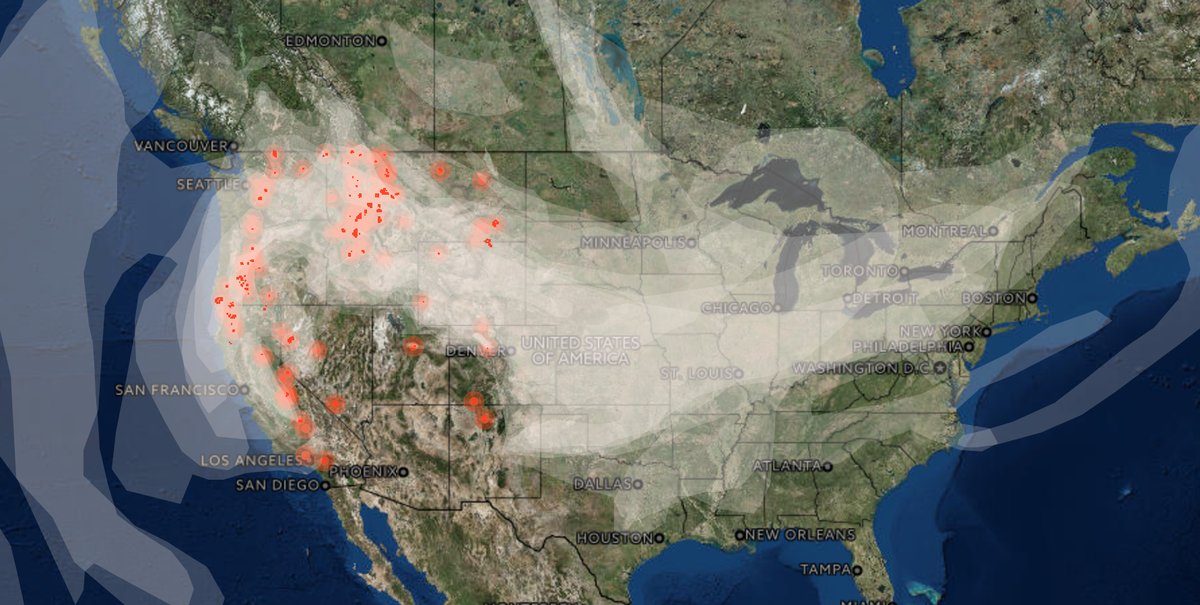
We're also told that BC has far exceeded it's CO2 estimates for this year because of the extent of the fires in the province. Actually, what goes up tends to travel and the map above shows the vast plume of smoke from fires in Western Canada and the Western States.

Sometimes we're told that we can't fix the environment without ensuring a strong economy, as though jobs and profits always trump care for the systems of our planetary home. Yet we are witnessing the catastrophic outcome of this wrong-headed approach to economics. The words economy and ecology come from the same Greek root meaning "home."

Scripture teaches us that God is the Creator of this home and instructs us to live in with respect and care and love. How can we not pay attention, repent of our hubris, and find a different path for the wellbeing of all living creatures?

Saturday, September 2, 2017

The Cry of the Earth

Pope Francis and Ecumenical Patriarch Bartholomew
We now into the season of the Church Year known as Creation Time, an observance  of the past fifteen years or so in the United Church of Canada. It is truly ecumenical and global though, and on September 1st Pope Francis of the Roman Catholic church and Orthodox Patriarch Bartholomew issued a joint statement to mark the World Day of Prayer for the Care of Creation.

The two said that what’s happening in the world today reveals a “morally decaying scenario, where our attitude and behaviour towards creation obscures our calling as God’s co-operators.” They call on those “in positions of social and economic, as well as political and cultural, responsibility to hear the cry of the earth, and to attend to the needs of the marginalized.” Those leaders, Francis and Bartholomew write, are called to “respond to the plea” of millions, and support “the consensus of the world for the healing of our wounded creation.”

One point stressed by Francis and Bartholomew is that care for the environment, and care for the poor, are inextricably linked.“We are convinced,” they say, “that there can be no sincere and enduring resolution to the challenge of the ecological crisis and climate change unless the response is concerted and collective, unless the responsibility is shared and accountable, unless we give priority to solidarity and service.”

These thoughts are contained in Pope Francis' encyclical from a couple of years ago, Laudato Si, and they are wise and address the broader issues of the planet. I appreciate that these leaders of the majority of Christians on the planet are so forthright, and that they are offering an alternative to the pathetic denial of fundamentalist climate change deniers. The pontiff and patriarch didn't look ready for a hike in the woods as they signed the statement, but you can't have everything.

Here's hoping that someone is listening to what Francis and Bartholomew are saying.

Pope and Patriarch: A common declaration for a shared world