
Tuesday, November 4, 2014

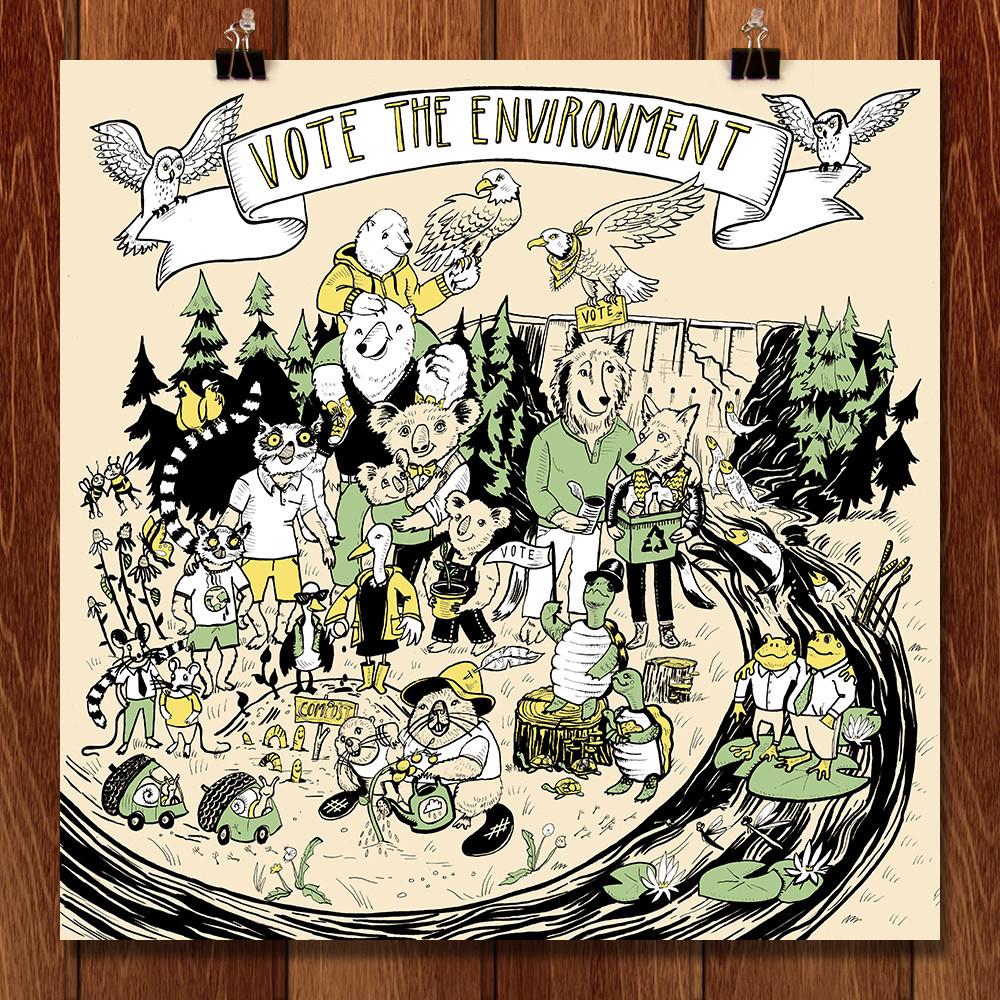
Faithfully Vote the Environment

Embedded image permalink

I am so grateful that we have finally arrived at mid-term election day in the United States. You will know that watching American TV stations means endless ads in which opponents slag each other without mercy. And we thought we were mean in our political advertising!

I'm intrigued by a series of ads inviting voters to consider environmental issues as they enter the booth today. I've never seen anything like this in Canada, but wouldn't it be a good reminder? Maybe we have been cowed into submission, convinced that we will all suffer if we hold our governments to account on earthcare.

I'm proud to say that the United Church and organizations such as Kairos have tried to include Creation Care on the political agenda. I know that Green Party leader Elizabeth May is a Christian and connects her political and religious sensibilities, but she has to be cautious in doing so as the leader of a political party in this country. Sometimes though, it all seems to be whistling into a rather toxic breeze.

Hey, Jesus called us to be faithful, not necessarily successful. Maybe the recent international reports on the state of the global environment and the effects of climate change will raise awareness and stir us to political action. Maybe.

Comments?


Tuesday, October 28, 2014

The Bathtub Ring from Hell

Hydrocarbon contamination Deepwater Horizon seafloor

Remember the massive BP Deepwater Horizon oil rig blowout in the Gulf of Mexico in 2010? Millions of litres of crude welled up from the depths and quickly contaminated everything within hundreds of kilometres.  Not only were we shocked by  the loss of human life, there was the appalling inability of the company to contain the spill. In the end it was the largest oil spill on record and large areas of sensitive marine habitat and wetlands were desecrated.  A variety of creatures including birds and dolphins were affected. It was an ecological tragedy and the billions of dollars in fines and reparations BP was forced to pay can't make it all better. Money isn't capable of doing that, even though some corporations act as though money is a god.


Now we're told that there is a giant bathtub ring of oil on the bottom of the Gulf, roughly the size of Manitoulin Island and 37 million litres of crude. We don't see this the way we saw beaches and pelicans soaked with the goo. But it is still out there, affecting the ecosystems, and probably will do for generations to come.

There was strong moral outrage when this happened, along with promises that the perpetrators would pay and laws would change. There were church services in coastal communities which were laments and vigils for an altered way of life. And yet the spills still happen, trains burn, pipelines burst.

Rather than worrying about the future prospect of hell, why don't we listen to the report on the lingering bathtub ring and realize that we are creating a living hell for future generations?  Surely we can do better.


Wednesday, October 15, 2014

The Buzz on Re-Greening

Beekeeper Wayne Tonelli, left, and Vale superintendent of reclamation and decommissioning Glen Watson with honey produced at the Copper Cliff site.

We lived in the city of Sudbury for eleven years and seemed to be constantly defending our choice to live there to friends and family from Southern Ontario. Why would we want to live in a place that looked like the moon? What about the emissions from the INCO smelter in Copper Cliff. We loved Northern Ontario and Sudbury was a good place to raise a family. Not only were we close to real wilderness, the city and its environs underwent a transformation from "scorched earth" to "re-greening."

Just before we left the community I spoke on a Sunday morning about the efforts of the mining companies and government to replant areas which fifteen years before were black and barren with the effects of sulphur. The so-called Superstack smelter in Copper Cliff was being retro-fitted with scrubbers so that sulphur dioxide was greatly reduced. When I showed before and after photos of the growth of trees over the years, members who had lived there for a lifetime were moved.  

I was intrigued to read about the latest project undertaken by Vale (formerly INCO.) It is a 10 million dollar remediation project around the smelter which includes planting wildflowers on formerly barren land. And what critters produce "liquid gold" from flowers? Yup, the nickel giant is now in the honey business thanks to the introduction of seven bee hives.   A former miner named Wayne Tonelli worked in Sudbury’s nickel mines for forty years and now he is a beekeeper. but his new gig is pretty sweet.

There are a lot of Vale employees who are not fans of the company and I understand why. But it's important to give credit where credit is due. There is also an underground tree greenhouse, begun during the INCO days, which provides the seedlings to plant more than 10 million evergreens in the Sudbury area. The mining firm also farms fish and to date has released 5,000 rainbow trout and 1,000 walleye into local rivers.

We humans manage to make a huge mess of the planet, and corporations often demonstrate psychopathic tendencies when it comes to treatment of Creation. I am encouraged by this effort, even if it may be dismissed by some as tokenism.

What do you think?

Monday, October 13, 2014

A New, Green Detroit?

Then the angel  showed me the river of the water of life, bright as crystal, flowing from the throne of God and of the Lamb  through the middle of the street of the city.
On either side of the river is the tree of life[ with its twelve kinds of fruit, producing its fruit each month; and the leaves of the tree are for the healing of the nations. 

The city of Detroit is in a death spiral, or so we hear on a regular basis. The city filed for bankruptcy, and retired civil servants are in danger of losing pensions. Once magnificent edifices are crumbling and there is talk of selling off part of the exceptional city art collection to pay the bills. Many people are so poor they can't pay their water bills and for a time hundreds were cut off daily. How can this happen in an American city?


In 1900 there were approximately 300,00 residents in Detroit, but by 1950 that was 1.85 million, growth driven by the auto sector and industry. Then the decline began and today less than 700,000 live in Detroit. This has resulted in the abandonment of whole neighbourhoods, the razing of more than 100,000 properties, while tens of thousands more are derelict.

The challenge is enormous, but what if these wastelands were transformed?  A master plan developed to respond to this reality, called Detroit Future City, imagines the reclamation of land. It would be used  for parks, forests, industrial buffers, greenways, retention ponds, community gardens, and even campgrounds. Of course this would cost a lot of money, and this is a bankrupt city but perhaps this project would put people back to work, giving them and the city some hope.

At the risk of flogging some verses to death, the vision of the heavenly city, the New Jerusalem of the book of Revelation has plenty of trees and clean rivers. Oh yes, and everyone has enough to drink: "To the thirsty I will give water as a gift from the spring of the water of life."

Why wait for the new Jerusalem? A new Detroit sounds good, as does the creative revitalization of many cities.

Does this sound like a pipe-dream, or could it happen? Should it happen?

Friday, October 10, 2014

Monkeys in Heaven

Do Monkeys Go to Heaven? <br>Finding God in all Creation

I got an email which is an advance notice about the publication of this book and I am intrigued, even though I'm not sure whether it has much to say about heaven.

Humans have spent a lot of time trying to establish themselves as gatekeepers of the life to come, although I don't recall God appointing any of us to the position. We make pronouncement about what religion to which others must adhere (ours), and what brand of our religion gets us in. We insist that heaven won't include all sorts of people, even if they do adhere to our sect or group, depending on sexual orientation or skin colour, or...you name it.

There are lots of Christians who would sneer at the prospect of animals in heaven. No matter that one's dog might be the most loyal, loving, and self-giving creature you will ever encounter. Because they can't profess faith in Jesus Christ they are on the outside. The Pearly Gates don't have a pet-door.

I was fortunate to have a religious studies prof nearly forty years ago named Millard Schumaker. He was both gracious and brilliant. He wrote a monograph on the prospect of a life to come for non--human creatures which appealed to my wife Ruth, who was also one of his students, but left me a little unsettled. If critters were "in" what did that say about the criteria for salvation? Of course what it says is that God is the Creator of all, loves all that God has made, and whose abundant grace makes room for all whom God chooses.  It's God who decides, not me. I'm not sure why that prospect didn't fill me with gladness rather than make me suspicious.

I am grateful that Dr. Schumaker pushed me to think outside the box (litter box?) of my late-teen Christian faith. There are some companion animals I would rather see again that some humans.

Do you figure there are monkeys and a bunch of other creatures in heaven? Is this heresy? Or do figure we're all just compost.

Tuesday, October 7, 2014

Testimony

There is an encouraging piece in the latest United Church Observer tucked away at the back of the magazine. It really should be closer to the action of feature articles and available online as well. It is under the heading of "Testimony" and that is exactly what it is, the faith story of Jessica Hetherington, who was raised as a Christian, became critical of organized religion for a number of reasons, then rediscovered "the God who speaks to me in my innermost depths."

Jessica's renewal of Christian faith has included intentional exploration of eco-theology, through doctoral studies. Her dissertation explored how changing patterns and behaviour in response to the ecological crisis can be a form of Christian discipleship. She has joined the United Church (hurray!) with her husband and children. She is a university lecturer and director of the Galilee Retreat Centre near Arnprior,Ontario. http://www.galileecentre.com/gallery/

I was taken by Jessica's story, and immediately picked up the phone and called her. We had what was for me an uplifting conversation about a number of things, including the value of connecting United Church folk who are passionate about caring for Creation. We haven't developed a way of doing this in the UCC the way other denominations have.

When we finished I was grateful that Jessica has found a home in the United Church.

Do we need to provide more opportunities for people to tell their stories of faith, of giving their testimony? Are you intrigued about reading Jessica's story? (October Observer, p.46) What about developing a way for those of like-mind on Creation Care to connect?

Thursday, September 11, 2014

Fracking Crazy

The United States has gone fracking crazy, a phrase that can be interpreted in a number of ways. Fracking is the latest assault by the oil and gas industry to extract product fossil fuels from the ground. It has been very lucrative, and is also highly controversial. Fracking requires lots of water and is often happening in areas where there is little water. There is growing evidence that the mixture with chemicals for extraction is affection water sources. It also appears to trigger frequent earth tremors and quakes in regions which have little history of these events.

I think fracking is crazy, because outcomes aren't known, and it encourages dependence on fossil fuels rather than developing energy alternatives It also makes me angry to read that fracking is going on in New Mexico's stunningly beautiful Chaco Valley, in the state's northwest. This was a place of inspiration for the artist Georgia O'Keefe, an Easterner who fell in love with the landscape of New Mexico.

Some of you will recall that I made several trips to Ghost Ranch, a conference and retreat centre in the high plateau of northern New Mexico. I loved it there and it turned out that the retreat house I stayed in twice was spitting distance to the adobe house O'Keefe used as home base for painting forays, including those to the Chaco Valley. Her view to Padernal mountain (below) was virtually the same as from the Ghost Ranch retreat house called Casa del Sol.


It seems that energy extraction trumps safety and beauty and common sense in the States these days. None of these have value anymore because they can't be measured by money.  Of course we have our own claim to non-sense in Alberta these days.

There is also a rich cultural history for the aboriginal peoples of this region:

...the massive buildings of the ancestral Pueblo peoples still testify to the organizational and engineering abilities not seen anywhere else in the American Southwest. The canyon that was central to thousands of people between 850 and 1250 A.D


Do you know anything about this region? Are you familiar with the paintings of Georgia O'Keefe? Are you concerned that fracking may be coming to a backyard near you?