Saturday, January 16, 2016

Finding a Pulse on the Colorado

eloise kendy 640x400

The wilderness and the dry land shall be glad,
   the desert shall rejoice and blossom;
like the crocus it shall blossom abundantly,
   and rejoice with joy and singing.


Isaiah 35:1-2a

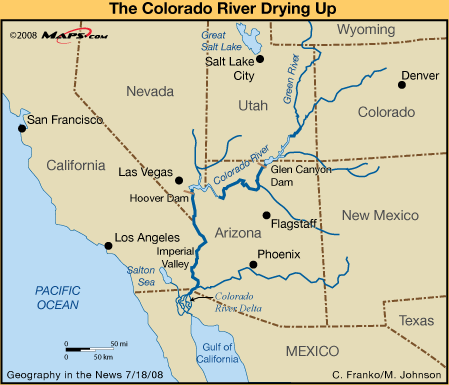
I like good news stories and there is one out of the States which is worth our attention. The once mighty Colorado River has been so degraded and diverted that it no longer flows to the sea. The delta which was once a rich and diverse ecosystem has dried up. The Nature Conservancy reports on what has occurred in the past few years:

Three years ago, an innovative agreement between the United States and Mexico ushered in a new era in international water management. Called Minute 319, the agreement authorized a broad array of actions in both the United States and Mexico. Among them was the recognition of the value of nature and the restoration of the parched Colorado River Delta through timed releases of water (called pulse and base flows) from upstream dams.Once an ecological treasure, the Delta is now a a dry, desolate river channel flanked by weed-choked floodplains and irrigated farmland. Fifteen years ago, conservation visionaries resolved to restore the channel and its floodplains to the critical wildlife migration corridor that it once was. Minute 319 initiated a full-scale feasibility test of that vision. By all accounts, Minute 319’s environmental provisions have been a success. In 2014, a pulse of water surged into the Colorado River Delta, rewetting the river corridor all the way to the Gulf of California for the first time in decades.

The result has been the return of wildlife, including bird species which disappeared years ago. Cottonwood and willow trees have suddenly appeared and some are already two metres tall.

Claiming that this is a resurrection might be premature, and a little too theological. But those responsible have certainly found a pulse, or at least created one. This is good news in the bigger scheme of God's Good News.

Thoughts?
Friday, December 12, 2014

Good News for Dogs in Heaven


There are a lot of things the current pope. Francis, is saying and doing on a number of fronts which encourage me. Doggone it, now he has made me happy again by welcoming critters into God's heavenly home. Here is a piece in Relevant magazine:

Good news, animal lovers. According to Pope Francis, our four-legged friends are heaven-bound. At a recent appearance in St. Peter's Basilica, the pope met a young boy who was visibly upset over the recent death of his dog. Pope Francis assured him,“One day, we will see our animals again in the eternity of Christ. Paradise is open to all of God’s creatures.” Though some theologians may argue that the comment is left to some interpretation, The New York Times reached out to The Rev. James Martin, a Jesuit preist and an editor at a prominent Catholic magazine, who said, “He said paradise is open to all creatures. That sounds pretty clear to me” ...

Are you with the pope of this one, or is this a howler? Does this make you a little more open to the ecumenical conversation with the Roman Catholic church?


Tuesday, November 4, 2014

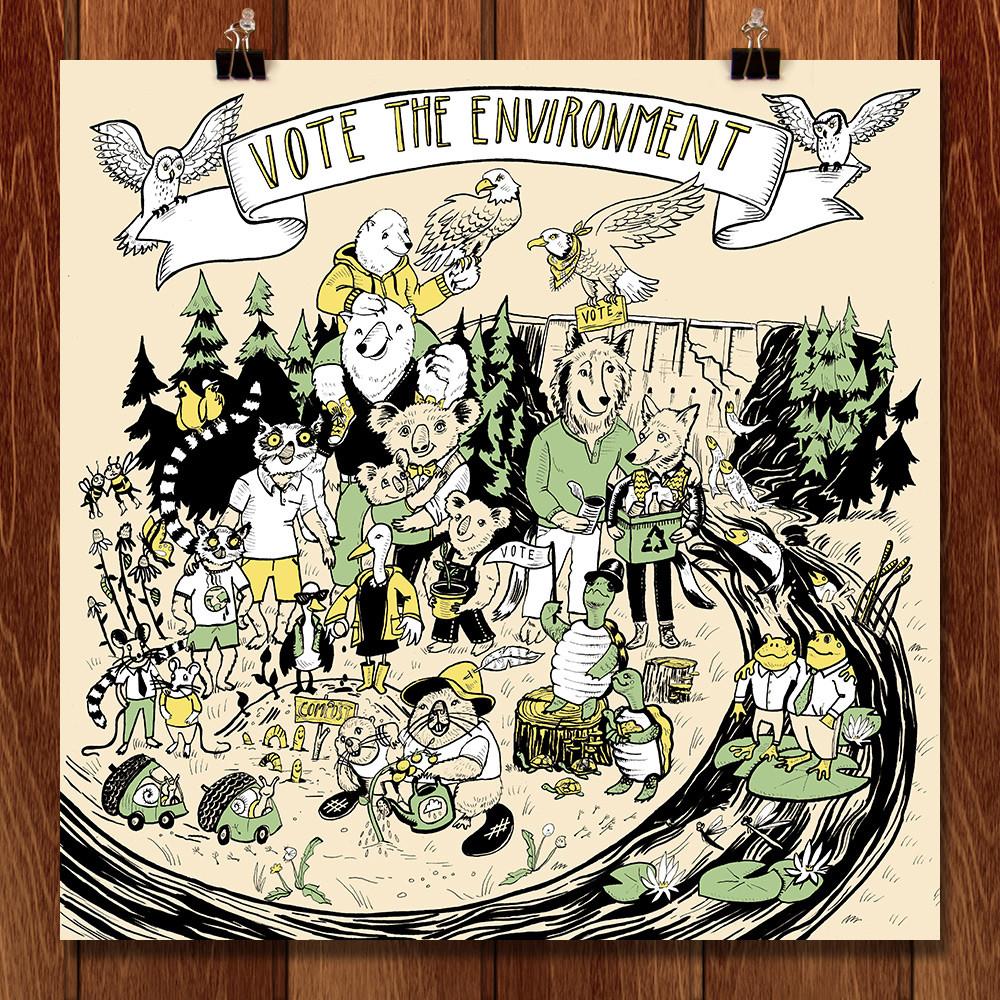
Faithfully Vote the Environment

Embedded image permalink

I am so grateful that we have finally arrived at mid-term election day in the United States. You will know that watching American TV stations means endless ads in which opponents slag each other without mercy. And we thought we were mean in our political advertising!

I'm intrigued by a series of ads inviting voters to consider environmental issues as they enter the booth today. I've never seen anything like this in Canada, but wouldn't it be a good reminder? Maybe we have been cowed into submission, convinced that we will all suffer if we hold our governments to account on earthcare.

I'm proud to say that the United Church and organizations such as Kairos have tried to include Creation Care on the political agenda. I know that Green Party leader Elizabeth May is a Christian and connects her political and religious sensibilities, but she has to be cautious in doing so as the leader of a political party in this country. Sometimes though, it all seems to be whistling into a rather toxic breeze.

Hey, Jesus called us to be faithful, not necessarily successful. Maybe the recent international reports on the state of the global environment and the effects of climate change will raise awareness and stir us to political action. Maybe.

Comments?


Tuesday, October 28, 2014

The Bathtub Ring from Hell

Hydrocarbon contamination Deepwater Horizon seafloor

Remember the massive BP Deepwater Horizon oil rig blowout in the Gulf of Mexico in 2010? Millions of litres of crude welled up from the depths and quickly contaminated everything within hundreds of kilometres.  Not only were we shocked by  the loss of human life, there was the appalling inability of the company to contain the spill. In the end it was the largest oil spill on record and large areas of sensitive marine habitat and wetlands were desecrated.  A variety of creatures including birds and dolphins were affected. It was an ecological tragedy and the billions of dollars in fines and reparations BP was forced to pay can't make it all better. Money isn't capable of doing that, even though some corporations act as though money is a god.


Now we're told that there is a giant bathtub ring of oil on the bottom of the Gulf, roughly the size of Manitoulin Island and 37 million litres of crude. We don't see this the way we saw beaches and pelicans soaked with the goo. But it is still out there, affecting the ecosystems, and probably will do for generations to come.

There was strong moral outrage when this happened, along with promises that the perpetrators would pay and laws would change. There were church services in coastal communities which were laments and vigils for an altered way of life. And yet the spills still happen, trains burn, pipelines burst.

Rather than worrying about the future prospect of hell, why don't we listen to the report on the lingering bathtub ring and realize that we are creating a living hell for future generations?  Surely we can do better.


Wednesday, October 15, 2014

The Buzz on Re-Greening

Beekeeper Wayne Tonelli, left, and Vale superintendent of reclamation and decommissioning Glen Watson with honey produced at the Copper Cliff site.

We lived in the city of Sudbury for eleven years and seemed to be constantly defending our choice to live there to friends and family from Southern Ontario. Why would we want to live in a place that looked like the moon? What about the emissions from the INCO smelter in Copper Cliff. We loved Northern Ontario and Sudbury was a good place to raise a family. Not only were we close to real wilderness, the city and its environs underwent a transformation from "scorched earth" to "re-greening."

Just before we left the community I spoke on a Sunday morning about the efforts of the mining companies and government to replant areas which fifteen years before were black and barren with the effects of sulphur. The so-called Superstack smelter in Copper Cliff was being retro-fitted with scrubbers so that sulphur dioxide was greatly reduced. When I showed before and after photos of the growth of trees over the years, members who had lived there for a lifetime were moved.  

I was intrigued to read about the latest project undertaken by Vale (formerly INCO.) It is a 10 million dollar remediation project around the smelter which includes planting wildflowers on formerly barren land. And what critters produce "liquid gold" from flowers? Yup, the nickel giant is now in the honey business thanks to the introduction of seven bee hives.   A former miner named Wayne Tonelli worked in Sudbury’s nickel mines for forty years and now he is a beekeeper. but his new gig is pretty sweet.

There are a lot of Vale employees who are not fans of the company and I understand why. But it's important to give credit where credit is due. There is also an underground tree greenhouse, begun during the INCO days, which provides the seedlings to plant more than 10 million evergreens in the Sudbury area. The mining firm also farms fish and to date has released 5,000 rainbow trout and 1,000 walleye into local rivers.

We humans manage to make a huge mess of the planet, and corporations often demonstrate psychopathic tendencies when it comes to treatment of Creation. I am encouraged by this effort, even if it may be dismissed by some as tokenism.

What do you think?

Monday, October 13, 2014

A New, Green Detroit?

Then the angel  showed me the river of the water of life, bright as crystal, flowing from the throne of God and of the Lamb  through the middle of the street of the city.
On either side of the river is the tree of life[ with its twelve kinds of fruit, producing its fruit each month; and the leaves of the tree are for the healing of the nations. 

The city of Detroit is in a death spiral, or so we hear on a regular basis. The city filed for bankruptcy, and retired civil servants are in danger of losing pensions. Once magnificent edifices are crumbling and there is talk of selling off part of the exceptional city art collection to pay the bills. Many people are so poor they can't pay their water bills and for a time hundreds were cut off daily. How can this happen in an American city?


In 1900 there were approximately 300,00 residents in Detroit, but by 1950 that was 1.85 million, growth driven by the auto sector and industry. Then the decline began and today less than 700,000 live in Detroit. This has resulted in the abandonment of whole neighbourhoods, the razing of more than 100,000 properties, while tens of thousands more are derelict.

The challenge is enormous, but what if these wastelands were transformed?  A master plan developed to respond to this reality, called Detroit Future City, imagines the reclamation of land. It would be used  for parks, forests, industrial buffers, greenways, retention ponds, community gardens, and even campgrounds. Of course this would cost a lot of money, and this is a bankrupt city but perhaps this project would put people back to work, giving them and the city some hope.

At the risk of flogging some verses to death, the vision of the heavenly city, the New Jerusalem of the book of Revelation has plenty of trees and clean rivers. Oh yes, and everyone has enough to drink: "To the thirsty I will give water as a gift from the spring of the water of life."

Why wait for the new Jerusalem? A new Detroit sounds good, as does the creative revitalization of many cities.

Does this sound like a pipe-dream, or could it happen? Should it happen?

Friday, October 10, 2014

Monkeys in Heaven

Do Monkeys Go to Heaven? <br>Finding God in all Creation

I got an email which is an advance notice about the publication of this book and I am intrigued, even though I'm not sure whether it has much to say about heaven.

Humans have spent a lot of time trying to establish themselves as gatekeepers of the life to come, although I don't recall God appointing any of us to the position. We make pronouncement about what religion to which others must adhere (ours), and what brand of our religion gets us in. We insist that heaven won't include all sorts of people, even if they do adhere to our sect or group, depending on sexual orientation or skin colour, or...you name it.

There are lots of Christians who would sneer at the prospect of animals in heaven. No matter that one's dog might be the most loyal, loving, and self-giving creature you will ever encounter. Because they can't profess faith in Jesus Christ they are on the outside. The Pearly Gates don't have a pet-door.

I was fortunate to have a religious studies prof nearly forty years ago named Millard Schumaker. He was both gracious and brilliant. He wrote a monograph on the prospect of a life to come for non--human creatures which appealed to my wife Ruth, who was also one of his students, but left me a little unsettled. If critters were "in" what did that say about the criteria for salvation? Of course what it says is that God is the Creator of all, loves all that God has made, and whose abundant grace makes room for all whom God chooses.  It's God who decides, not me. I'm not sure why that prospect didn't fill me with gladness rather than make me suspicious.

I am grateful that Dr. Schumaker pushed me to think outside the box (litter box?) of my late-teen Christian faith. There are some companion animals I would rather see again that some humans.

Do you figure there are monkeys and a bunch of other creatures in heaven? Is this heresy? Or do figure we're all just compost.