Monday, March 2, 2020

The Wild Resurgence of Chernobyl

 European bison (Bison bonasus), boreal lynx (Lynx lynx), moose (Alces alces) and brown bear (Ursus arctos) photographed inside Chernobyl Exclusion Zone (Ukraine).

European bison (Bison bonasus), boreal lynx (Lynx lynx), moose (Alces alces) 
and brown bear (Ursus arctos) photographed inside Chernobyl Exclusion Zone (Ukraine).

I'm quite fascinated by articles and reports from areas on Planet Earth which may have been stripped bare by humans or are abandoned because of disasters our species have caused. I've written about these on a number of occasions, often because the news of restoration is surprisingly positive in some circumstances. Forests regenerate, and fish return. One example is the Chernobyl exclusion zone where there has been a resurgence in wildlife, despite the high levels of radioactivity from the nuclear disaster of 1986. 

A recent article from the World Economic Forum entitled What's Going on in Chernobyl Today? includes photos of critters which had long disappeared from the area because of the proximity of humans. They include herds of wild horses, and packs of wolves.No one can predict the long-term health for these returning species but for the moment they are signs of hope. 

 A raven stretches its wings as it sits on a post inside the 30 km (18 miles) exclusion zone around the Chernobyl nuclear reactor.

Humans are coming back for tours of abandoned towns and the surrounding countryside, but there are also some people who continue to live there despite the health risks. They are nearly all elderly women who are living there "under the radar" (under the radiation?) so they can be in their own homes rather than warehoused in unfamiliar places.

There are times when it is important for humans to intervene in natural processes and habitats, to be stewards of Creation as Genesis suggests, We can also keep in mind that the Creation myth which begins our Christian bible speaks of the richness and diversity which the Creator brings about without the involvement of the first Groundlings. I want to pay attention to these stories and pass them on as often as possible. It's vital that we humans practice humility, to be "down to earth" for the sake of our planet. And we need the hopeful examples of what can happen when we get out of the way. 

Image result for the grandmothers of chernobyl

The Babushkas of the Chernobyl Exclusion Zone


Sunday, March 1, 2020

Wilderness Hooky on the 1st Sunday of Lent

Image preview

The gospel reading for this first Sunday of Lent tells us about Jesus' self-imposed "quarantine, his 40-day experience in the Judean wilderness before his years of ministry commenced. I've written often enough of how a number of central biblical figures encountered God in the midst of solitude and stark separation from humans. It's as though psychological and spiritual clarity and integration happens in those settings. While there may be an element of risk, the God who is the Creator, the divine source of storm and wind and blazing heat is heard with a different kind of clarity.

This morning I decided to forego heading to church in Trenton (it sounds as though I missed a delightful service) so that I could have my own quasi-wilderness experience while Ruth is away. I ended up skiing across fields and alongside woods on the edge of Saigwin Creek, which flows into the Bay of Quinte. For an hour or so I was about as alone in the quiet as is possible in the noisy reality of Southern Ontario. It was a bit icy and not the best for skiing, but it didn't really matter. I saw animal tracks and heard woodpeckers and felt the bracing cold on my skin on a sunny Winter morning. Judging by the long-range forecast this may be the last opportunity to get out on skis as we begin the journey toward Spring.

I'm grateful that I didn't meet up with Satan while I was out there, at least not to my awareness. I did have a sense of peace and clarity and I'm grateful that after decades of "show-time" urgency on Sunday mornings I could take this contemplative moment. What a gift from the Creator. 

Image preview

Wednesday, February 26, 2020

Fire and Hope on Ash Wednesday

Ash Wednesday
Receive this cross of ash upon your brow,
Brought from the burning of Palm Sunday’s cross.
The forests of the world are burning now
And you make late repentance for the loss.
But all the trees of God would clap their hands
The very stones themselves would shout and sing
If you could covenant to love these lands
And recognise in Christ their Lord and king.
He sees the slow destruction of those trees,
He weeps to see the ancient places burn,
And still you make what purchases you please,
And still to dust and ashes you return.
But Hope could rise from ashes even now
Beginning with this sign upon your brow.
British cleric, poet, and musician, Malcolm Guite wrote this sonnet for Ash Wednesday a decade ago. It is dreadfully appropriate for the Year of Our Lord 2020 given the fiery devastation of Australia, destructive wildfires in California and Alberta and the Amazon which have occurred since it was written.
There is a call to repentance and an invitation to a hope which rises from the ashes. 
Image result for australia on fire from space


Wednesday, February 19, 2020

Beloved Amazon

Last year I wrote about the synod or symposium concerning the countries and peoples of the Amazon Basin convened by Pope Francis in Rome. It was a signficant gathering over two weeks which included Indigenous representatives. It became controversial amongst those who perceived Christianity and Roman Catholicism in disturbingly racist and colonialist ways. Francis himself was receptive and celebrated the Indigenous expressions of faith which critics decried as pagan.Some of the devotional sculptures brought by Indigenous residents of the region were stolen and dumped in the nearby Tiber river, although they were later recovered. 
Francis recently issued a post-synodal exhortation,  called Querida Amazonia, which translates as "the beloved Amazon". In it he identifies four dreams for the future of the region which to my mind are powerful, and should be taken seriously by every Christian, regardless of background. 
These are the dreams, the four major sections of the exhortation:
I dream of an Amazon region that fights for the rights of the poor, the original peoples and the least of our brothers and sisters, where their voices can be heard and their dignity advanced.
I dream of an Amazon region that can preserve its distinctive cultural riches, where the beauty of our humanity shines forth in so many varied ways.
I dream of an Amazon region that can jealously preserve its overwhelming natural beauty and the superabundant life teeming in its rivers and forests.
I dream of Christian communities capable of generous commitment, incarnate in the Amazon region, and giving the Church new faces with Amazonian features. 
I hope that Pope Francis' influence can help bring to fruition aspects of these Godly, just, and compassionate dreams. I feel that his commitment to care for Creation in the Amazon is exemplary. He is a true Groundling! God knows he'll have a challenging time in doing so, even within his own church. 

Image result for amazon synod sculptures stolen

Tuesday, February 18, 2020

Moby Dick and the End of an Era


Image result for moby dick rockwell kent

In a recent conversation about classic books with Ruth, my wife, we agreed that we would probably never read Moby Dick even though it is oft-quoted. We decided to listen to it as we travel hither and yon, and that's what we have been doing.

We're now about a third of the way through the 135 chapters and it has been a revelation. The Sermon is about a rather fiery message on a Sunday morning about Jonah and the whale which is thoroughly entertaining. Then there is The Ramadan,  a surprisingly enlightened outlook on another religion given that Melville's novel was published in 1851 (there are still racist perceptions.)


It's also fascinating that Melville, who worked in his youth as a whaler, interjects in his narrative praise and support for the importance of the whaling industry of the 19th century. 


It's obvious that whaling is generally held in low regard, because of its butchery, but through Ishmael, the narrator, he is an advocate for the almost Godly dignity of the whaling industry..  Whalers have expanded our understanding of the globe through exploration. The whale is important to world literature. Even kings and queens rely on whale oil for their coronations. I wasn't so sure about this latter claim, so I checked. Lo and behold, the mixture of ingredients in the coronation oil for the current monarch of the British Empire, Queen Elizabeth II , included ambergris from a sperm whale, of which the fictional white whale was one. 


Ishmael also points out that whaling is the generator of considerable wealth because the harvested oil is used for many important purposes, including lighting. 


But, though the world scouts at us whale hunters, yet does it unwittingly pay us the profoundest homage; yea, an all-abounding adoration! for almost all the tapers, lamps, and candles that burn round the globe, burn, as before so many shrines, to our glory!


Image result for moby dick wood cuts

Moby Dick Erika Gallagher

All this struck me as quite current, in a way. We constantly hear similar arguments for fossil fuels, even to the claims that they are the source of wealth in Canada we are moving toward "ethical oil." Eventually though, whales were hunted toward extinction, and whale oil was supplanted by -- you guessed it -- fossil fuels. 

We are in the midst of a 21st century transition from fossil fuels and while the road is bumpy, there is evidence that it is occurring. We can be grateful for all the benefits we've enjoyed from the fossil fuel energy era, even as we hope it comes to an end.   We can hope and pray that humans aren't on the edge of extinction because of our over-reliance, along with so many other of God's creatures.   

Image result for moby dick rockwell kent

Monday, February 17, 2020

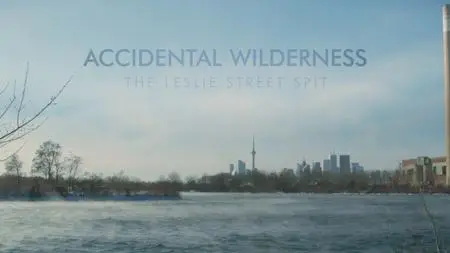
Accidental Wilderness

Image result for accidental wilderness leslie street spit


After several years of drifting away from CBC television's The Nature of Things series we've been watching both current and past episodes thanks to streaming, the reason we'e stopped watching conventional TV in the first place.

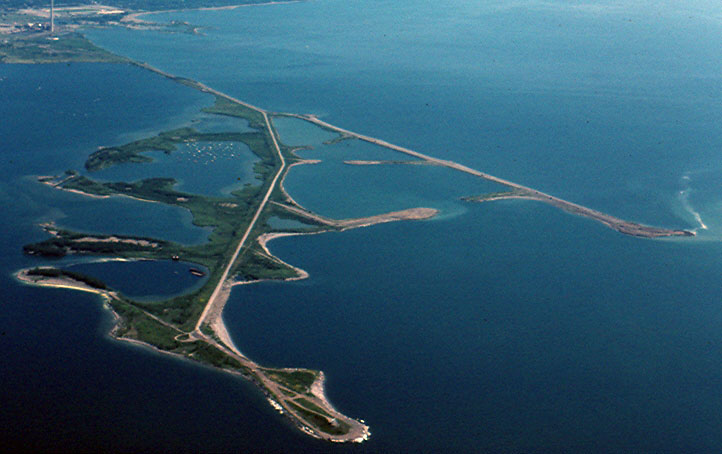
The most recent episode was An Accidental Wilderness: The Leslie Street Spit. The Spit is a human-made peninsula out into Lake Ontario in the heart of Toronto. It was created as a breakwater using rubble and construction waste from the TO subway excavations and other projects. Initially it was a barren wasteland with all sort of concrete and rebar protruding through the soil. Now there are areas of the Spit which are more than 60 years old and, lo and behold, the wasteland has become an urban wilderness. Not really a park, as the program points out, even though the official name is Tommy Thompson Park, but an urban wilderness area with 360-plus species of mammals, birds, and amphibians. 

https://gem.cbc.ca/category/documentaries/featured-documentaries/a04e4803-9d0c-4480-845f-54bcf081b65f

Image result for accidental wilderness leslie street spit

There is now an excellent team of people ensuring that this accidental wilderness is balanced and that it can benefit all the critters, including humans. There are walking tours for birders and people spot mink and rabbits and coyotes. Busloads of urban school kids show up to learn about aquatic creatures and regeneration The Spit is an important migratory bird stopover as well. We were encouraged by what we watched and I might even say it was a spiritual experience. We are discovering as humans that when we get out of the way, or at least step back, ecosystems and what we might term as Creation will recover, slowly at times, remarkably quickly at others. 

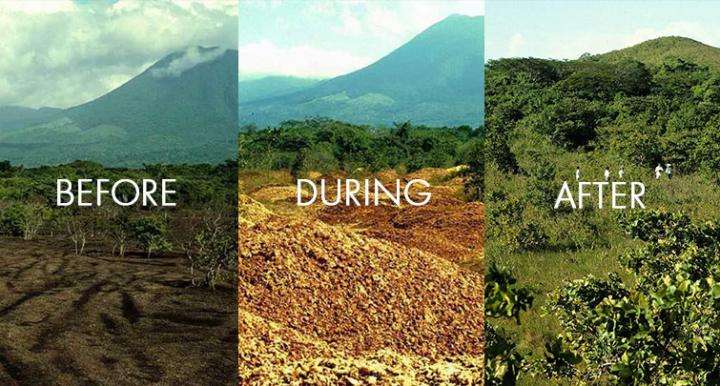
I regularly read of the success stories such as marine protected areas where fish species return once over-fishing is ended. One of my favourite stories is about an orange juice company in Costa Rica dumping a thousand truckloads of orange peels in an area that had been denuded of trees. While the company was subject to a lawsuit, a study showed that 16 years later this area had self-regenerated and become quite lush with many species of trees and vines. The organic material of the dumped peels had inadvertently proved to be a natural nursery. 
Image result for how orange peels revived a costa rican forest

Costa Rica

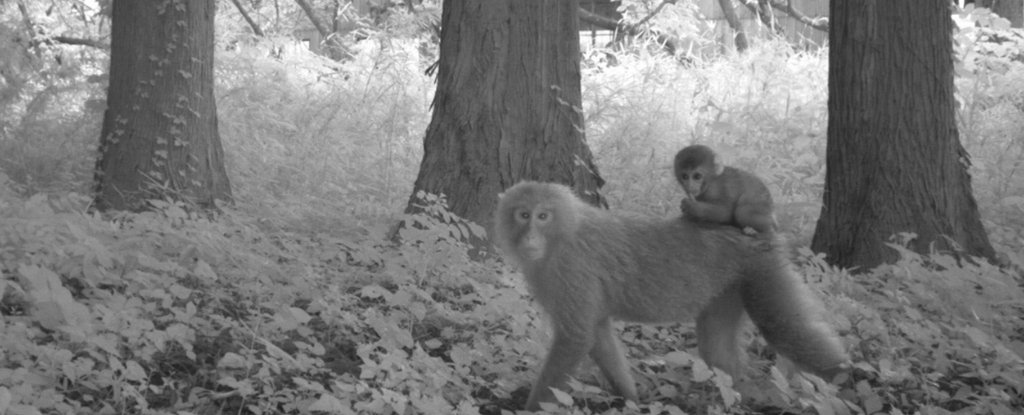
Researchers have discovered that within the radiation exclusion zones around Chernobyl, Ukraine, and Fukushima, Japan, many species of wildlife have returned once humans departed. While they may not be healthy in the long-term, humans had driven them away altogether. 

It's strange to think that this happens despite ourselves as is the case with the Spit and in Costa Rica. I do believe that we can "live with respect in Creation", as our United Church New Creed suggests, through humility and allowing our beautiful, complex planet to flourish. 

Hawaii may be a great distance from the Leslie Street Spit but this prayer seems fitting for what is happening in Toronto and many other places on our beleaguered planet. 


May God’s earth continue to live.
May the heavens continue to live
May the rains continue to dampen the land
May the wet forests continue to grow
Then the flowers shall bloom
and we people shall live again.   

Hawaiian Prayer

main article image

Fukushima Exclusion Zone


Tuesday, February 11, 2020

More Church Forests and Providence

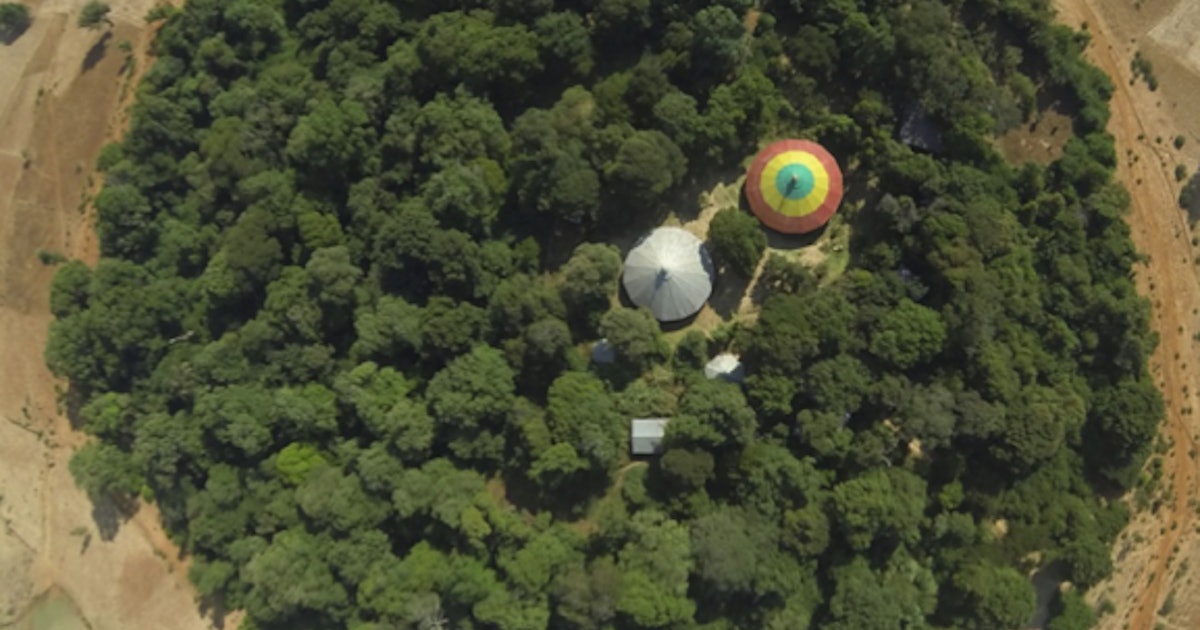
Image result for church forests of ethiopia


A couple of days ago I wrote about an Emergence magazine essay by Fred Bahnson about the remarkable Church Forests of Ethiopia. They are sanctuaries of biodiversity in a deforested country. Bahnson is a Christian who is a eco-contemplative, an excellent writer who invites us to move deeper into our experience of Creation and Creator.

I also mentioned my friend Carmen who was in Ethiopia last year on a hiking trip with several others.  I sent him a link to a National Geographic article about Church Forests when I found out he was going and he visited a couple of them while there. In Ethiopia he and his companions chatted with another North American over lunch and discovered that this person was also writing an article about Church Forests.

98.-Church-procession

When I sent Carmen the link to the new Emergence essay and accompanying film he realized that his random encounter over lunch was likely with Fred Bahnson. They have since corresponded and, yes, it was writer Fred.

Perhaps this wasn't random or coincidental after all. I've spent the past couple of days marvelling over the long odds of this happening. I'm delighted that it did. I've heard that God moves in a mysterious way, God's wonders to perform. 

Here is the link to my recent blog on the subject and the National Geographic piece which got this all going. 

https://groundlingearthyheavenly.blogspot.com/2020/02/mystical-church-forests-of-ethiopia.html

https://www.nationalgeographic.com/environment/2019/01/ethiopian-church-forest-conservation-biodiversity/